
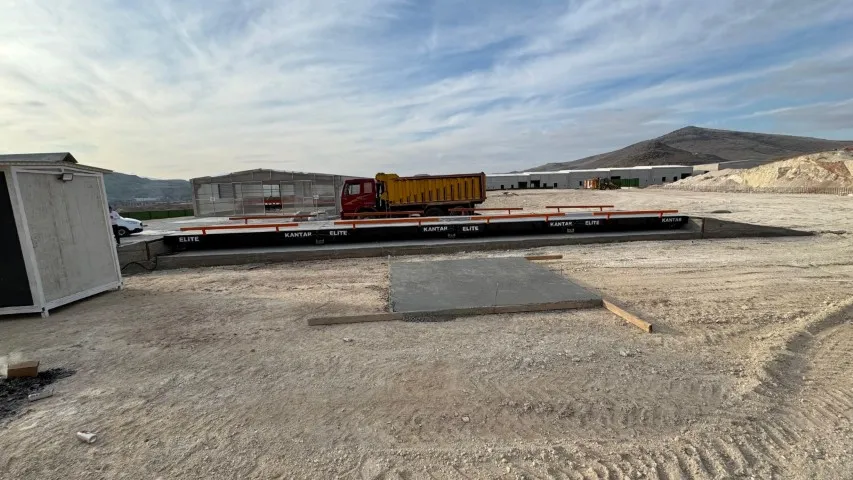
Many of the faults behind the complaint “Our scale is weighing incorrectly” are actually mechanical rather than electronic. Here are the causes we encounter most often:
1. Friction
Stones, mud or ice touching the edge of the platform, the pit wall or the ramp carry part of the load. The scale under-weighs.
2. Corner imbalance
When the balance between load cells is disrupted, a vehicle gives different readings at different points on the platform.
3. Moisture and water
Moisture entering the junction box or cable connections makes the signal unstable.
4. Zero drift
Mud, snow or forgotten material on the platform changes the tare. A zero check should be performed before every weighing.
5. Vehicle not fully on the platform
A wheel left on the ramp is the simplest yet most common cause of incorrect weighing. Position sensors prevent this error.
6. Wind and vibration
Crosswind or vibration from nearby heavy machinery can make the reading fluctuate; indicator filter settings should be adjusted to the site.
7. Aging components
Over the years, load cells and electronic components drift. Regular calibration makes this drift visible.
If you suspect incorrect weighing, first clean around the platform and check the zero. If the problem persists, contact us for measurement.
 How Often Should a Weighing Scale Be Calibrated?30.10.2026
 6 Signs of Load Cell Failure in a Truck Scale24.10.2026
 How to Prepare for a Periodic Scale Inspection?18.10.2026